
'5 Questions' with Charles Constantin, Group Director BD, Gutmann Middle East
- Swati Kundra

- Jan 21, 2025
- 6 min read
Updated: Oct 3, 2025

Gutmann is a leading aluminium systems provider with over 80 years of history. In my conversation with Charles Constantin, Group Director for Business Development, Gutmann Middle East, we explored the nuances of architecture, design, technology, and trends that shape bespoke structures.
Q1. With Gutmann Middle East operating across multiple regions, including Europe, the Middle East, and North America, how do you support the development of bespoke façade?
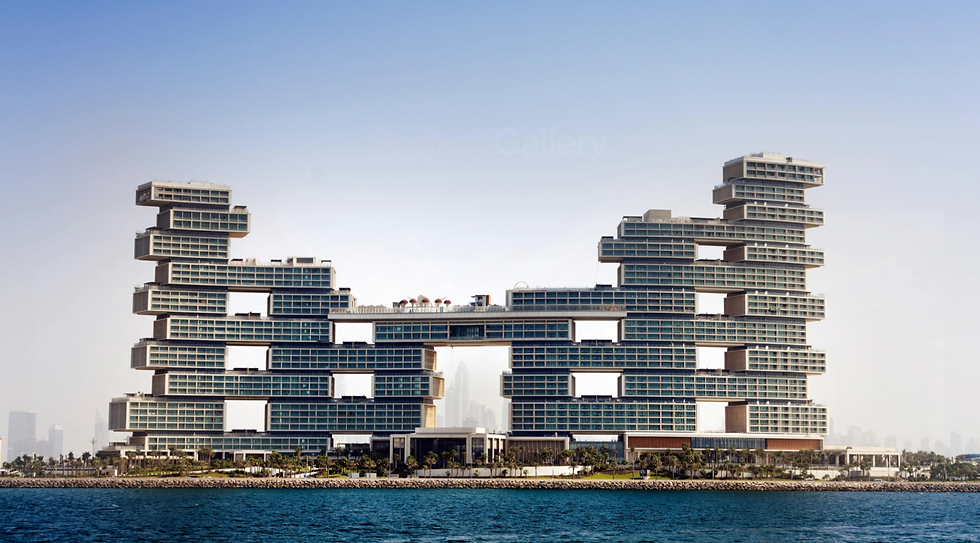
Architecture is an art — an ever-evolving art form — as each architect follows their own school of thought. Some embrace modern designs, some prefer traditional styles, and others blend the two. Many incorporate historical elements with unique styles, such as varied pillars and intricate shapes. They might favour inclined geometric movements, symmetry, or a combination of both. Together, these elements reflect the diversity of architectural ideas.
Gutmann Group is about bespoke architecture. Now, what does that mean? We love working with architects to create tailor-made façades and building envelopes. Whether it’s windows, doors, curtain wall systems, or energy-efficient building materials, we collaborate with them to bring their vision to life.
Think of the façade as the dress of a building — it’s part of the larger building envelope, shaping its identity and style. While many people can produce, design, and engineer products, truly understanding architecture and the dreams of architects is no simple task. Turning those dreams into reality? That’s where we excel.
When you talk architecture, you would want architecture and engineering to speak the same language. The unification of these two pillars is industrial engineering. And we, as industrial professionals, are the producers of those ideas and building systems. We simplify things for architects.
All the architects we collaborate with across the regions share one culture, one passion, and one important goal: the ability to connect architecture, design, and industrial engineering together to realize their dreams.
Q2. What trends in modern architecture and façade engineering do you believe will shape the future of building envelope solutions?

Trends are always tied to the present moment we live in. Now, how do we translate them into solutions? Today, there are two key components: on one hand, you have technology, and on the other hand, you have a critical element in the trends space — universality.
So, how can technology and universality come together? Some people seek taste and speed, while others value art. At the same time, they want something iconic yet unconventional. All these activities today need to be connected to technology. AI plays a major role in supporting this trend by implementing specific design directions.
And then the term 'smart façade' or 'smart building envelope' comes into play. So, what does 'smart' really mean? We associate 'smart' with digital elements. Engineering is also going to the next level, which adds another capability. Architectural practices will also evolve because in the world of façade engineering, the technology can help integrate and master the processes and procedures that bridge architectural engineering and civil engineering.
And yet, creativity is the game-changer. It is at the centre of action, and this is where the human mind, values, and touch remain powerful. Any lack of creativity or deviation from powerful creativity will make any architectural model weak or poor. Therefore, the hard work and effort invested in the creative process, combined with all the smart technologies we adopt, will make architecture and architects extremely successful and very trendy.
And I'm sure architects and architecture-related companies will continue to come up with more and more trends and meet all those trends and solutions.
Q3. How are you integrating sustainable practices into product development and operations?

Sustainability is super hard work. It requires building not just a product, but an entire portfolio around it, along with operations to support its deployment — manufacturing, installation, commissioning, and beyond. Achieving sustainability means going back to the source, reevaluating the entire supply chain, scrutinizing sourcing materials, and understanding the mindset behind procurement processes. From raw materials to machinery, everything must align to create a truly sustainable equation.
We, as a group, started this practice many months ago with experts in the field who partnered with us to help implement sustainable practices every day. With their guidance, we’ve integrated various elements of sustainability into our processes. This includes training for everyone involved, from those on the procurement side to those in industrial operations, ensuring a unified approach to sustainability.
Sustainability extends to the design side as well. In design, you have to think of sustainability, as building codes vary across cities, shaped by local weather and climate conditions. There are many details involved, and all of that contributes to the solution you provide. For example, if you take a façade system, typically a curtain wall or an element of it, you have to consider how sustainable and green it is. So, we have all these features, and then there are certifying bodies around the world, experts in the calculation methods.
I believe by 2030, the entire growth will be highly focused on a very serious methodology of sustainability, where industrial firms involved in manufacturing and serving the world of façades and new structures will have to abide by these codes and regulations very, very seriously.
Q4. How do partnerships with architects, engineers, and contractors influence your product innovation?

Big time. First, let me focus on the architects and engineers — they are the lifeblood of the products we create. They provide us with a wealth of ideas, and architecture is at the very heart of our company. In fact, our chairman and founder is an architect, and I also have a minor in architecture.
The partnership with architects is extremely essential because everything we do is driven by the taste, trends, and ideas of the architectural leaders we deal with all the time.
Now, coming to the engineers — it's the same story. We have strong connections and close relationships with exceptional engineers. They are highly respected, and we love what they say.
I also need you to understand something important about our industry: architects and engineers sometimes don't get along much, because the architect is focusing on the shape and design, and the engineer is focusing on the safety, enuring everything is in compliance with codes, regulations, and so on. Both are extremely important. And we listen to both. We never prioritize one at the expense of the other. Equally important are all the calculations, numbers, civil engineering codes, and so on.
And now we come to the contractors. The relationship is focused on execution. Some contractors specialize solely in fabrication, while others handle both fabrication and installation. There are also those who take care of fabrication, installation, commissioning, and, of course, the finishing work.
Contractors play a crucial role. Why? Because they are the ones who ensure the delivery of the project — the successful delivery of the wonderful product we provide ultimately depends on them.
So the design side — the shape, portfolio, features, functions, and all the elements that bring in the flavours of architecture and engineering — is one thing. Until that point, it’s still theoretical. It’s only when you move into the delivery side that things become real. That’s where the weight of the contractors is critical. And what do we do? We have a certification program for contractors and subcontractors. We train them and work with them on their style and how they adapt to ours.
The three — architects, engineers, and contractors — represent the pillars of building development, each contributing one-third equally to the whole. All three are extremely important. Now you can understand how product innovation is deeply embedded in these pillars.
Q5. How has branding contributed to Gutmann Middle East's growth and market positioning across international markets?

One has to remember that a brand is a promise. You don't get a good reputation unless you keep your promise, and when you do, it becomes contagious. That's what we stick to.
Let me share an interesting aspect with you about our industry. I’d like you to travel a little with me into this industry, which, for more than 5,000 years, has kept everyone — from bakers and shoemakers to pharmacists, medical professionals, fabric makers, tissue producers, and everyone else busy. When construction is happening in a town, anywhere, it drives the entire economy into action. So the word of your reliability and consistency spreads quickly.
Architects who work with us are international, working in cities like Dubai, Singapore, Mumbai, Sydney, Tokyo, London, Paris, or New York. Wherever they go, they carry with them the beautiful promise we have made and delivered. They go across countries and say, "I want Gutmann to be my partner on this building."
Before construction, it used to be the mining industry that brought prosperity to towns — extracting resources, building, and contributing to growth. But mining is also a part of construction.
Construction, however, is incredibly powerful. In mining, you're extracting raw materials, and while it generates revenue and employs many people, the results aren’t immediately visible to everyone. In architecture, on the other hand, whatever you create is right there for people to see, use, and live in.
So, architecture keeps everyone busy and gives you the opportunity to create jobs for others while creating something of quality and repute.


